

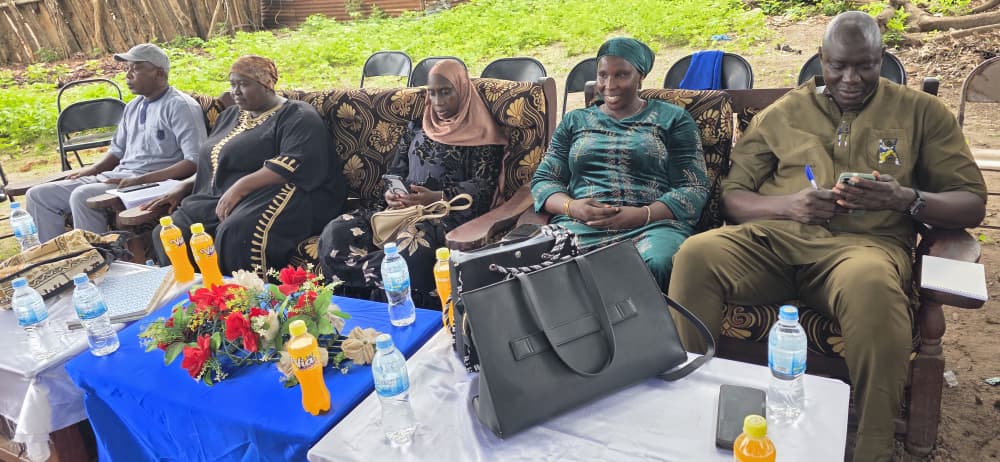
Last week, the ROOTS Project, with funding from the Global Environment Facility (GEF), successfully concluded a series of Thematic Learning Forums across the North Bank Region (NBR), Lower River Region (LRR), and West Coast Region (WCR). The forums focused on strengthening the sustainable management of Agroforestry, Assisted Natural Regeneration (ANR), and Pasture and Rangeland Management interventions.
The forums brought together project beneficiaries, technical experts from the Departments of Forestry, Parks and Wildlife, Livestock Services, Regional Agriculture Directorates, and ROOTS Project staff to exchange experiences, discuss implementation challenges, and identify practical solutions to enhance the long-term sustainability of GEF-supported interventions.
Through interactive presentations, beneficiary testimonies, and peer-to-peer learning, participants shared community-led management practices that have contributed to high tree survival rates, successful pasture establishment, and improved protection of community forests. Discussions also highlighted key challenges, including bush fires, termite infestation, livestock intrusion, flooding, waterlogging, weak fencing, and limited community participation.
A key highlight of the forums was the field learning visits to some of the best-performing agroforestry sites, where participants observed first-hand the management practices behind the high survival rates of lime and moringa trees. Successful communities demonstrated the value of strong management committees, effective community by-laws, routine monitoring, timely replacement of dead seedlings, fire prevention measures, and collective ownership of project interventions.
The learning forums reaffirmed that knowledge sharing among communities is a powerful tool for improving project performance and ensuring the long-term sustainability of climate-resilient land management practices.
Through these initiatives, the ROOTS Project continues to equip rural communities with practical knowledge that supports environmental restoration, strengthens climate resilience, improves livestock production, and contributes to sustainable livelihoods across The Gambia.